saint
St. Paul, Apostle to the Nations
A Pharisee of Tarsus, persecutor of the Church, struck down on the Damascus road by a voice from heaven and a light beyond seeing. Apostle to the Gentiles through three long missions, founder of the churches of Asia Minor, Macedonia, and Greece, and author of the letters that became the second body of the New Testament. Beheaded at Rome under Nero around 67.
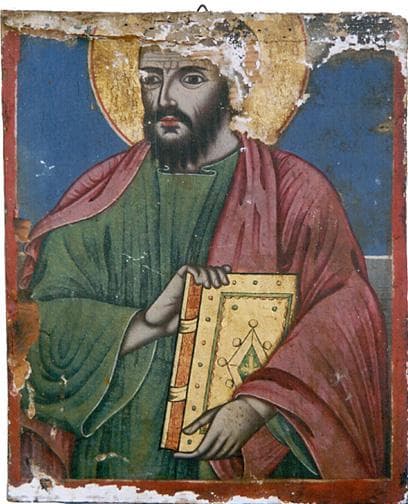
Paul, Apostle to the Nations — Public domain. Via Wikimedia Commons.
Life
Saul of Tarsus was born around the year five into the diaspora Pharisee family of a Roman citizen — both a child of the Law and the heir of Greek learning. Educated at Jerusalem at the feet of the great rabbi Gamaliel, he grew zealous for the traditions of his fathers, and at the stoning of the protomartyr Stephen he stood by guarding the cloaks of the witnesses.
He was on the road to Damascus with letters of authority to seize the Christians there when a light from heaven brighter than the noonday sun struck him to the ground, and a voice said, "Saul, Saul, why dost thou persecute Me?" Blinded, he was led by the hand into the city, where Ananias laid hands on him and the scales fell from his eyes. From that day the persecutor was the apostle — Saul became Paul, the apostle to the Gentiles.
Three great missionary journeys took him through Cyprus, Asia Minor, Macedonia, Achaia, and back to Jerusalem, planting churches at Antioch in Pisidia, Iconium, Lystra, Philippi, Thessalonica, Athens, Corinth, and Ephesus. Beaten with rods, stoned and left for dead, shipwrecked three times, often in cold and nakedness, he was — by his own reckoning — a fool for Christ. Yet from the prisons of his last years he wrote the letters that became the second body of the New Testament, the foundation of every later attempt to think the gospel through.
Brought to Rome under guard for his appeal to Caesar, he spent two years awaiting trial in a rented house and received all who came to him. About the year 67, under Nero, he was led out to the Ostian Way and beheaded — a Roman citizen could not be crucified — at the place still called Tre Fontane. Of him the Lord had said: "He is a chosen vessel unto Me, to bear My name before the Gentiles and kings."
Traditions
Feast day
June 29
Topics
Works in library