father
Eusebius of Caesarea
Bishop of Caesarea Maritima and the first systematic historian of the Church — friend and panegyrist of Constantine, signer of Nicaea (with quiet reservations), and preserver of much that would otherwise have been lost. His Ecclesiastical History from the apostles to 324 remains the foundational narrative of the first three Christian centuries.
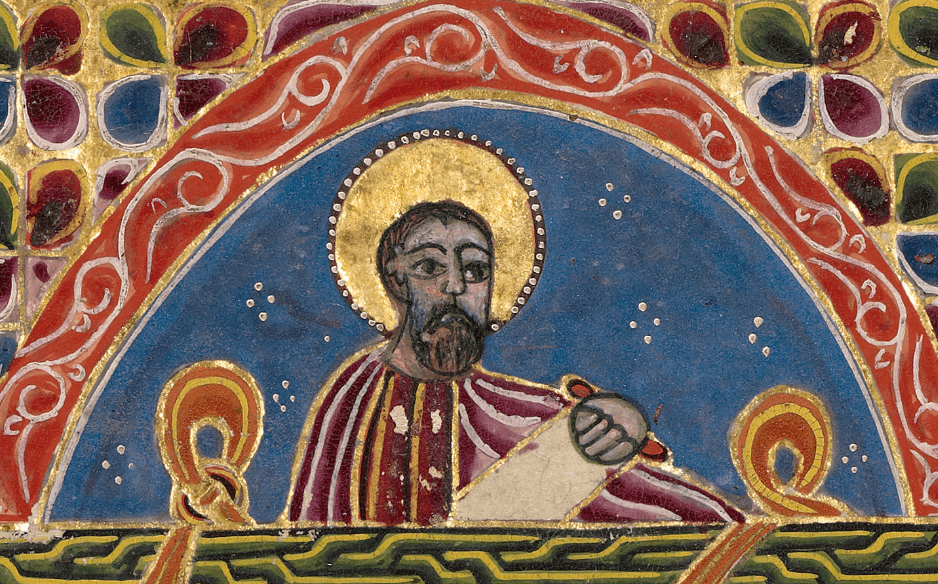
Eusebius of Caesarea — Public domain. Mesrop of Khizan. Via Wikimedia Commons.
Life
Eusebius, bishop of Caesarea in Palestine, was born around the year 260 and came to maturity under the scholar Pamphilus, who had gathered at Caesarea one of the finest libraries in the Christian world — the legacy of Origen, who had worked there a generation before. Pamphilus was arrested during the Diocletianic persecution and martyred in 309/310; Eusebius was imprisoned but released, and took as his own surname the name of his revered master (Eusebius Pamphili). He became bishop of Caesarea around 313 and attended the Council of Nicaea in 325.
His place in the Church's memory rests above all on the Ecclesiastical History (Historia Ecclesiastica) — a ten-book history of the Church from the apostles to the age of Constantine, the first such work ever undertaken and the irreplaceable primary witness to virtually everything we know about the Church of the first three centuries. Without Eusebius, many of the works of earlier writers would survive only as names; he quotes extensively from documents he had access to and we have not. He also wrote the Life of Constantine; the Preparation for the Gospel (Praeparatio Evangelica), a massive compendium arguing that Greek philosophy had prepared the world for Christianity; and a Chronicle of world history that was widely translated and used in subsequent centuries.
His theological position at Nicaea was cautious and mediating — he initially favored a middle formula between the strict Nicene position and Arianism — and this equivocation has colored his standing in later Orthodoxy. He is not universally venerated as a saint in the Orthodox calendar, though his historiographical contribution to the Church's self-understanding is beyond question. He died around the year 340.
Traditions
Topics
Works in library
Readings and commentaries
Church History (Historia Ecclesiastica)
Ten books from the apostles to the reign of Constantine — the foundational narrative of the first three Christian centuries and the primary source preserving fragments of Papias, Hegesippus, Ignatius's letters, and dozens of writers whose works are otherwise lost.
Life of Constantine
Four-book panegyrical biography of Constantine the Great — Eusebius's account of the first Christian emperor, including the vision of the Cross at the Milvian Bridge, the calling of Nicaea, and the founding of Constantinople.
Oration in Praise of Constantine
Eusebius's tricennial oration delivered for the thirtieth anniversary of Constantine's reign — a developed political theology of the Christian emperor as image of the divine Logos.
The Oration of Constantine to the Assembly of the Saints
Constantine's own theological address to a synod of bishops, preserved by Eusebius — a window into how the first Christian emperor framed his faith publicly.