saint
St. Pachomius the Great
The Egyptian who received from an angel the rule of cenobitic life, gathering the monks of Tabennisi into the first true monastery on the upper Nile. Where Anthony showed the desert as the school of one anchorite, Pachomius made it the school of the common life under a common rule.
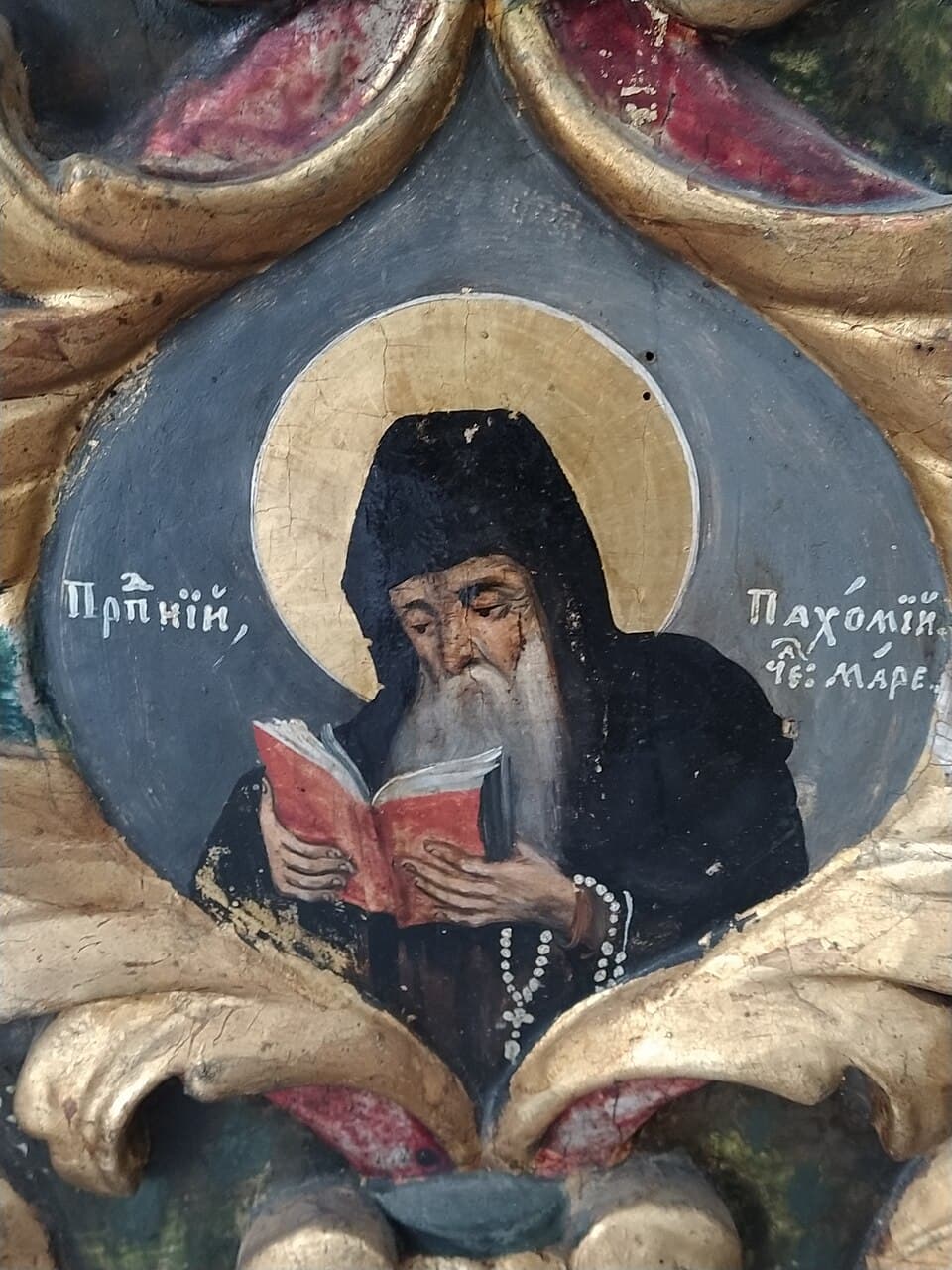
Pachomius the Great — CC BY 4.0. Mihai Andrei. Via Wikimedia Commons.
Life
Pachomius was born around 292 in the southern Egyptian Thebaid, in the small town of Esneh on the Nile, to pagan Egyptian peasant parents. As a young man he was conscripted into the Roman army of Constantine's eastern war (about 312), and during his service was held with his fellow conscripts in a transit prison at Thebes (the Egyptian Thebes, not the Greek). There a small community of Christians of the city came to the soldiers with food and supplies, asking nothing in return.
Pachomius asked who they were, and was told: Christians, those who serve the God who became man for the sake of mankind. The act struck him: he prayed that night that if their God would deliver him from the army, he would serve Him for the rest of his life. The campaign ended quickly; Pachomius was discharged; he came back to upper Egypt and was baptized in a village church.
He attached himself for several years (about 313-320) to an elderly hermit named Palamon, who lived in the desert outside the village of Tabennisi. Palamon taught him the desert tradition that Anthony had founded a generation earlier: the cell, the unceasing prayer, the manual work, the silence. Pachomius did all this well, but in prayer one night around 320 he received a vision that turned him from the anchoritic to the cenobitic life: an angel appeared and gave him a bronze tablet inscribed with the Rule of a common monastic life and bid him gather brothers to live by it.
He went down to the abandoned village of Tabennisi on a bend of the Nile, built a small chapel and cells, and began to invite others. Within a few years he had a hundred monks; within a decade, a thousand; by his death in 348, nine separate monasteries (one of them a convent for women, led by his sister Mary) with somewhere between three and seven thousand monks in total — the first true cenobitic system in the history of the Church. His Rule, the earliest preserved monastic rule in any language, would shape Benedict in the West, Basil in Cappadocia, and every later cenobium in the Christian world.
His monks lived in clusters of cells around a common chapel, ate twice a day in silence, wore identical undyed linen habits, and shared all goods. The day was divided between the divine office, manual work (basket weaving, gardening, copying manuscripts), and study; literacy was required, and the brothers who couldn't read on entry were taught at once. The week culminated in the Sunday Eucharist; the year in the great agapē of Pascha.
Pachomius died of plague at the age of fifty-six in the year 348, after refusing to flee a region-wide epidemic and remaining with his sick monks. He was buried at Tabennisi. The Coptic Church remembers him on May 9; the Greek and Slavic Churches on May 15. He is the father of all cenobitic monasticism, and the patron of those who pursue the spiritual life in community rather than alone.
Traditions
Feast day
May 15
Topics
Works in library