saint
St. Tarasius, Archbishop of Constantinople
Patriarch of Constantinople who under the Empress Irene convened and presided over the Seventh Ecumenical Council at Nicaea in 787, restoring the veneration of holy icons to the Church after the first iconoclasm.
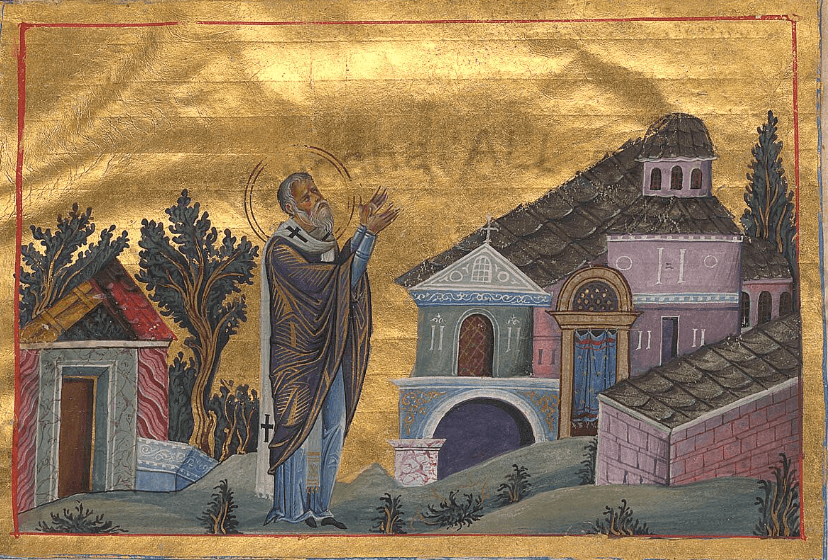
Saint Tarasius of Constantinople — Hand-curated icon.
Life
Tarasius was born around 730 in Constantinople of pious noble parents and educated for the imperial civil service. He rose to the office of imperial secretary under Constantine VI and his mother the Empress Irene, in the years immediately following the long iconoclast period. When the patriarchal throne fell vacant in 784, Irene — who was preparing to restore the icons but needed a patriarch of stature to preside over the council — proposed Tarasius, then a layman, for the see.
He was tonsured, ordained through every grade of the clergy in the customary rapid succession, and consecrated patriarch on Christmas of 784. His first major act was to summon the Seventh Ecumenical Council, which convened at Nicaea in 787 and formally restored the veneration of holy icons as the apostolic tradition of the Church. The Definition of Nicaea II — distinguishing between the worship (latreia) due to God alone and the veneration (douleia) of holy images — was largely shaped by Tarasius's theological work in preparing the council.
He governed the see for twenty-one years afterward, navigating a series of imperial crises with a combination of pastoral firmness and political skill. He died in peace in 806. His feast falls on February 25.
Traditions
Feast day
February 25
Topics
Works in library